

Many adults live with a nervous system that feels constantly on edge. Thoughts race, tension lingers, and it’s hard to relax even when life is calm. If that feels familiar, it may reflect how childhood trauma and the nervous system adapted early on to stay safe.
When fear or instability repeats in childhood, the brain learns to remain alert. That survival pattern can carry into adulthood, making everyday stress feel heavier than it should.
This perspective offers a different way to approach healing, one that works with the nervous system rather than pushing it to change.
Shaped by years of clinical work with trauma-related stress patterns, it reflects what helps the brain release survival responses and move toward safety again.
What Childhood Trauma Means for Your Nervous System
 Childhood trauma includes experiences that feel frightening or overwhelming to a child. This can involve frequent yelling, emotional neglect, loss, abuse, or ongoing instability. These experiences don’t have to be extreme to have an impact. What matters is that they felt unsafe at the time.
A child’s nervous system is still developing. It doesn’t yet have the ability to regulate strong stress on its own. When something feels threatening, and there’s no consistent sense of safety, the nervous system adapts in order to cope.
The nervous system functions as the body’s alarm system. It controls heart rate, breathing, and alertness, helping the body respond to danger. Research on childhood trauma shows that repeated stress during development can alter how this system learns to recognize safety and return to calm.
When stress happens again and again, that settling doesn’t always occur. The system may stay in a state of readiness, even when danger is no longer present. Responses such as fight, flight, or freeze can become automatic rather than temporary.
In adulthood, this can show up as ongoing tension, strong reactions to stress, difficulty relaxing, or feeling emotionally shut down. These responses can feel confusing when life no longer feels unsafe, but they reflect how the nervous system learned to protect you early on.
How Childhood Trauma Quietly Changes Your Brain
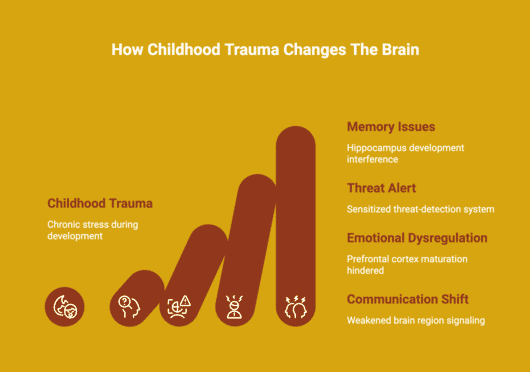
Childhood trauma doesn’t only affect emotions or behavior. It can also influence how the brain develops and responds to stress. These changes are subtle and often go unnoticed, but they can shape how a person thinks, feels, and reacts well into adulthood.
1. Memory and Learning Can Become Less Reliable
The hippocampus is the part of the brain that helps store memories and supports learning. When a child grows up under constant stress, stress hormones interfere with how this area develops.
As a result, everyday memories may feel fuzzy, while stressful experiences stay sharp. In adulthood, this can show up as forgetfulness, difficulty concentrating, or feeling mentally scattered when stressed.
2. The Brain Becomes More Alert to Threat
Early exposure to fear or unpredictability can sensitize the brain’s threat-detection system. Study shows that repeated childhood stress can heighten activity in brain areas responsible for detecting danger, even after the original threat has passed.
As a result, everyday situations may trigger strong reactions. These responses reflect learned protection from the nervous system, not a personal flaw or lack of control.
3. Emotional Regulation Can Be Harder
Trauma can affect brain areas responsible for calming and regulating emotions, including parts of the prefrontal cortex. When stress dominates early development, these systems may have fewer opportunities to mature fully.
Adults may notice quick frustration, emotional overwhelm, or difficulty settling after stress. These patterns often reflect early adaptations rather than current circumstances.
4. Communication Between Brain Regions Can Shift
Healthy regulation depends on strong communication between the thinking and feeling centers of the brain. Chronic childhood stress can weaken how efficiently these regions signal one another.
This may show up as rumination, difficulty shifting attention, or feeling stuck in certain emotional or thought patterns, especially during stress.
5. These Changes Reflect Adaptation, Not Damage
The brain adjusted to keep you safe during a vulnerable time. These changes are not permanent flaws or signs of something being “wrong.”
Because the brain remains capable of change, new patterns can form with the right support. As safety increases, the nervous system and brain can gradually learn to respond differently.
How Survival Mode Shows Up in Your Body and Mind
 When nervous system and trauma lock together, survival mode can take over. The body and mind stay on alert, reacting as if danger is present even during calm moments.
Always On Edge or Frozen
For some people, survival mode looks like constant activation. Hands feel shaky, the chest stays tight, and breathing becomes shallow. Others experience the opposite response and feel frozen, numb, or disconnected, as if watching life from a distance.
Both responses are ways the nervous system learned to cope. Staying alert or shutting down helped reduce harm when safety felt uncertain. When the system loses its internal sense of “I’m safe,” it can remain stuck in these states.
Your Body Hurts Too
Trauma often shows up physically. The stomach may tighten into IBS, headaches become frequent, and fatigue settles in. Chronic pain can also develop without an obvious cause.
Many people don’t connect these symptoms to earlier stress until later in life. The body often carries what the mind learned to push aside. Immune function may dip, sleep becomes harder, and recovery takes longer.
Mind Feels Scattered
Survival mode affects focus and emotions. Concentration can feel fractured, and emotions may swing quickly or feel overwhelming. Shame may surface with thoughts like “something is wrong with me” or “I’m too much.”
You might recognize some of these patterns:
- Feeling jumpy at noises
- Difficulty feeling joy
- A twisting feeling in the gut before stress
- Anger followed by regret
Ways to Help the Nervous System Settle

The nervous system is capable of change at any age. Patterns shaped by childhood trauma were learned for protection, not because something is broken. With repeated signals of safety, the brain can begin to respond differently.
Helpful ways to support that shift include:
- Slow breathing: Longer exhales help the nervous system shift out of high alert and into rest.
- Body awareness: Gently noticing physical sensations can help release tension the body has been holding.
- Safe expression: Writing or speaking with someone trusted can ease internal pressure and overwhelm.
- Time in nature: Quiet time outdoors supports the nervous system in settling and regulating stress.
- Predictable routines: Simple, consistent habits help the nervous system feel safer and more stable.
While these practices are meaningful, it’s often important to have support that goes deeper. Trauma-informed therapy can help the nervous system feel safe enough to change without becoming overwhelmed.
Approaches such as EMDR or somatic therapy work with how the brain and body store stress, helping old survival patterns loosen over time. For many people, this kind of support makes healing feel more stable and sustainable.
Stepping Toward Calm and Safety
Childhood trauma and the nervous system often remain connected because the brain learned how to stay safe under difficult conditions.
Those responses made sense at the time. They don’t mean something is wrong with you now. With steady signals of safety and the right kind of support, the nervous system can begin to settle and respond differently.
If you recognize yourself here, support can help you feel less overwhelmed. Contact me today to talk about what healing might look like for you, at a pace that feels safe.
Frequently Asked Questions
How does childhood trauma affect the nervous system in adulthood?
Childhood trauma can train the nervous system to stay alert long after danger has passed. As an adult, this may show up as tension, anxiety, shutdown, or strong stress reactions. These patterns reflect early protection, not weakness, and can shift with safe, supportive experiences.
Can the nervous system heal from childhood trauma?
Yes. The nervous system remains adaptable throughout life. With repeated signals of safety, the brain can learn new responses to stress. Healing often happens gradually through supportive relationships, gentle practices, and trauma-informed therapy that works with the nervous system rather than forcing change.
Why do small stressors feel overwhelming after childhood trauma?
Early trauma can sensitize the brain’s threat system, making it react quickly to perceived danger. As a result, everyday stressors may trigger intense responses. This isn’t an overreaction, it’s a nervous system that learned to stay prepared when safety was uncertain.
Is childhood trauma always linked to abuse?
No. Childhood trauma can include emotional neglect, chronic conflict, loss, or unpredictability, not just abuse. What matters most is how safe a child feels, not how severe an experience looks from the outside. Subtle, ongoing stress can affect the nervous system just as deeply.
What kind of therapy helps with childhood trauma and the nervous system?
Trauma-informed approaches that focus on the brain and body are often most helpful. Therapies such as EMDR, somatic therapy, or other nervous-system-based methods help reduce survival responses gradually, supporting regulation without overwhelming the system.
| childhood trauma and the nervous system |