

Living with complex trauma often means carrying emotions and reactions that feel bigger than the moment. You may appear steady to others while privately battling tension, shame, or sudden overwhelm that you can’t easily explain.
These patterns can leave you feeling frustrated or stuck, especially when old responses keep showing up despite all your efforts to move forward. Understanding what complex trauma does to the nervous system is an important first step toward relief.
EMDR for complex trauma offers a way to process what was once too overwhelming to face. As a trauma therapist who works with these patterns every day, I’ve seen how adapted EMDR can help people feel safer, more grounded, and more in control of their lives. Here’s what that process looks like and why it matters.
What Is EMDR for Complex Trauma?
 EMDR for complex trauma is a therapy that helps your brain process long-term or repeated painful experiences so they no longer feel overwhelming or take over your daily life. It’s designed for people whose trauma often began in childhood through emotional neglect, abuse, domestic violence, or growing up in an unpredictable or unsafe environment.
Unlike single-event trauma, complex trauma develops over years of needing to stay alert, hide your emotions, or navigate relationships without consistent support. Its impact often appears in many layers, emotional flashbacks, chronic shame, dissociation, and difficulty feeling secure with others.
Because of this, EMDR for complex trauma moves at a steady, intentional pace. Studies have shown that sessions may be adapted and take longer to account for the multiple or ongoing traumatic experiences involved.
Why EMDR Must Be Modified for Complex Trauma
 Complex trauma affects the nervous system in deeper, more layered ways. Research on complex post-traumatic stress disorder shows that repeated trauma affects self-concept and nervous system responses, not just reactions to a single event.
Ongoing trauma can weaken a sense of safety and disrupt emotional regulation, making it harder to approach painful memories directly.
Research on complex post-traumatic stress disorder shows that repeated trauma leads to lasting changes in emotion regulation, self-concept, and nervous system responses, rather than a single-event threat reaction.
If EMDR moves too quickly, the nervous system can become overwhelmed. Instead of relief, a person may feel panicked, numb, or disconnected from their body.
Shame and self-blame can increase, and daily functioning may suffer. This is why EMDR can feel helpful for some people and destabilizing for others.
EMDR for complex trauma starts by building safety. Therapy often focuses first on grounding skills, emotional regulation, and understanding how your body responds to stress. The structure stays the same, but preparation and stabilization take more time, so your system isn’t pushed beyond what it can handle.
Newer Approaches Used in EMDR for Complex Trauma
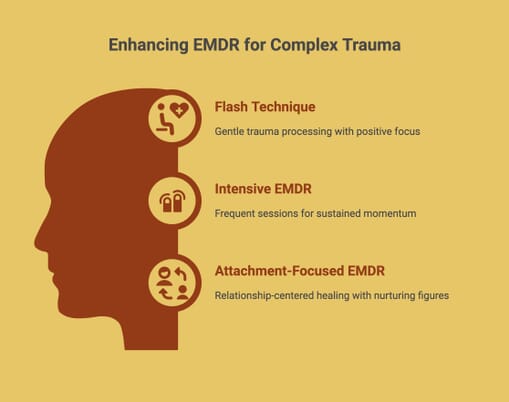
Several newer methods are often added to EMDR to make the work safer and more manageable for people with complex trauma. Here are three commonly used approaches:
- Flash Technique: A gentle method that lets you work with trauma without feeling overwhelmed. You keep your focus on something positive while briefly “flashing” toward the memory.
- Intensive EMDR: Longer or more frequent sessions done over a shorter period. This helps maintain momentum and reduces the emotional strain between sessions.
- Attachment-Focused EMDR: A warmer, relationship-centered style of EMDR. It uses support, attunement, and imaginal nurturing figures to help heal early relational wounds.
Supportive Therapies That Enhance EMDR
 EMDR for complex trauma often works best when paired with other approaches. Here are a few modalities commonly used alongside EMDR:
- Internal Family Systems (IFS): Helps you understand and work with your inner “parts,” such as protective or younger parts. This reduces internal resistance and makes EMDR processing smoother.
- Dialectical Behavior Therapy (DBT): Builds skills for managing intense emotions. Tools like paced breathing or grounding exercises help you stay present when things feel overwhelming.
- Somatic Therapy: This approach pays attention to what your body is feeling, tightness, numbness, racing heartbeat, and teaches you how to settle your system. This is especially useful if you tend to dissociate or disconnect during stress.
Blending these methods creates a more supportive foundation, making EMDR for complex trauma more effective and less overwhelming.
How Long Does EMDR Take for Complex Trauma?
 There’s no fixed timeline for EMDR because complex trauma affects each person differently. Your history, current stress, level of dissociation, and support system all shape the pace.
Weekly therapy often ranges from 6–18 months, sometimes longer, because the work requires extended preparation, steady pacing, and processing multiple layers of experience.
Others prefer weekly or biweekly sessions that feel more manageable. What matters most is moving at the speed of safety, adjusting as needed so your system stays stable and supported throughout the process.
What matters most is moving at the speed of safety, working with a therapist who can adjust the pace so your system stays stable and supported throughout the process.
Preparing Your Mind and Body for EMDR
 Preparation helps EMDR for complex trauma feel safer and more manageable. It gives your nervous system support, so the work doesn’t feel overwhelming.
Helpful internal supports include:
- Gentle breathing: Slow exhales or counted breaths to calm your body.
- Sensory grounding: Using sight, touch, sound, smell, and taste to stay present.
- Calm or safe place imagery: Visualizing a space where you feel protected.
- Supportive inner figure: Imagining a comforting presence during sessions.
Your therapist will also help you notice early signs of overwhelm, like tightness, dizziness, or feeling spaced out, and practice returning to the present when those signals appear.
Practical preparation can also make a big difference:
- Lighter schedules: Avoid major demands right after sessions when possible.
- Trusted support: Let one person know you’re starting EMDR.
- Post-session rituals: Activities like a warm shower, walking, or calming music.
- Basic care: Regular meals, hydration, and rest to support processing.
Some people feel tired or emotionally tender after sessions. Preparation won’t remove all discomfort, but it can help you feel steadier and more supported along the way.
A Calmer, Safer Way to Heal
EMDR for complex trauma isn’t fast, but it can bring real relief for people who’ve lived through long-term harm or instability. With steady pacing and strong preparation, the work can soften symptoms that once felt stuck and help you feel more grounded in your daily life.
Working with a therapist who truly understands complex trauma makes this process safer and more effective. With the right support and pacing, EMDR can become a meaningful part of your healing. If you feel ready to take that next step, contact us today.
Frequently Asked Questions
How is EMDR different for complex trauma?
EMDR for complex trauma moves at a slower, more stabilizing pace. Instead of diving into specific memories right away, therapy focuses on grounding skills, emotional safety, and understanding how long-term trauma shaped your nervous system. This prepares your mind and body to process experiences without becoming overwhelmed.
Can EMDR make symptoms worse before they get better?
Some people feel more emotional or tired as their nervous system begins shifting old patterns, but this should be manageable with proper pacing. A trained EMDR therapist tracks your window of tolerance and adjusts the work so you stay grounded, safe, and supported throughout the process.
Is EMDR effective for childhood trauma?
Yes. EMDR is one of the most researched therapies for early trauma and can help soften long-standing patterns of fear, shame, and self-blame. By working slowly and building safety first, EMDR helps the brain update old survival responses that formed in childhood and continue affecting life today.
What if I dissociate easily during trauma work?
Many people with complex trauma dissociate, and EMDR can still be effective with the right modifications. Therapists use grounding tools, shorter processing sets, and alternative forms of bilateral stimulation to help you stay present. The goal is not to push through distress but to work within your window of tolerance.
How will I know if EMDR is working for me?
Progress often shows up gradually, less emotional intensity, fewer triggers, more clarity, and a greater sense of connection in your daily life. You might recover from stress more quickly or notice your inner critic quieting. A therapist trained in complex trauma will help you track these shifts over time.