

EMDR therapy helps reduce trauma responses that feel automatic, intense, and difficult to control. It supports the brain in processing experiences that continue to trigger emotional and physical reactions.
These responses often show up as repeated patterns that do not fully resolve on their own, even with awareness or effort. When do these patterns signal the need for deeper processing?
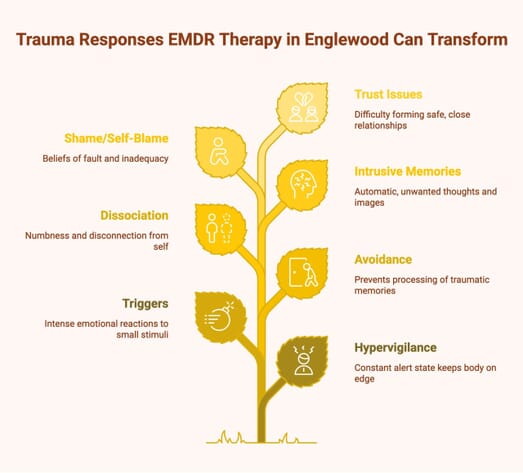
Below are common trauma responses EMDR therapy can help shift.
1. Hypervigilance keeps your body on alert
 Hypervigilance reflects a fight-or-flight response that stays active longer than needed, keeping your system in a heightened state of anxiety even without a present threat.
You might notice scanning your environment, reacting quickly to sounds, or feeling unable to fully relax. This state can last for hours or throughout the day, keeping your heart rate elevated and muscles tense.
It can feel like your body is always preparing for something to go wrong. This often comes from a time when staying alert helped you feel safe.
2. Triggers cause intense emotional reactions
 You might notice reacting very strongly to something small, even when part of you knows it should not feel that intense.
A certain tone of voice, a look, or a simple situation can suddenly bring up fear, anger, or start panic attacks. It can happen fast, before you have time to think or calm yourself down.
This can feel confusing because the reaction does not match what is happening right now. It can feel like something else is getting pulled into the moment.
EMDR therapy works by helping your brain process what is behind these reactions, so they begin to feel less intense and easier to move through.
3. Avoidance shapes more of your life than you realize
 Avoidance can become a pattern when something still feels too uncomfortable to face directly.
Staying away from certain places, conversations, or even thoughts often comes from a desire to avoid discomfort. This can happen intentionally, or it can happen automatically without much awareness.
While avoidance can bring short-term relief, it can also keep the memory from being worked through. The more something is avoided, the more it can continue to hold its intensity and stay active within you.
4. Dissociation leaves you numb or disconnected
 Dissociation can feel like a sense of disconnection from yourself, your body, or your surroundings.
Spacing out, feeling detached, or struggling to stay present in conversations can happen without much warning. Time may feel unclear, and emotions can feel distant or muted.
This response often develops as a way to manage overwhelm. Instead of feeling everything at once, your system creates distance so it does not become too much to hold.
5. Intrusive memories still break through
 Intrusive thoughts are often automatic and can appear without warning that can be linked to anxiety or past experiences that the brain has not fully processed.
Flashbacks, vivid recollections, or recurring images can interrupt your day or affect your sleep. They can show up even when you are trying to focus on something else.
These moments can feel immediate, as if they are happening again rather than something that has already passed.
6. Shame and self-blame stay close to the surface
 Persistent shame and self-blame can reflect beliefs that took shape during difficult moments, often traced back to childhood trauma.
Thoughts like “It was my fault” or “I should have done something different” can return again and again, even when part of you knows they are not fully accurate.
These beliefs can quietly shape how you see yourself and influence how you respond in different situations.
7. Trust and closeness still feel unsafe
Difficulty with trust or closeness can come from patterns formed when the connection did not feel safe.
Pulling away from others, feeling guarded, or becoming overwhelmed as relationships deepen can happen without much warning, patterns that EMDR for relational trauma is designed to address. Even supportive interactions can feel uncomfortable or hard to accept.
This can create distance in relationships, even when there is a desire for connection.
Address trauma responses with EMDR therapy in Englewood
EMDR therapy in Denver helps shift trauma responses by processing what still feels active, so reactions begin to feel less intense and more manageable.
As this work unfolds, emotional responses can feel less immediate, physical tension can ease, and patterns that once felt automatic can begin to change.
If these patterns feel familiar, EMDR provides a clear, structured way to work through what is behind them, so your responses begin to reflect what is happening now rather than what has not been processed. Get a Free Consultation.
Frequently asked questions
How do I know if EMDR therapy is right for me?
EMDR is often a good fit when emotional or physical reactions feel hard to control, even when you understand them. If certain memories still feel active or trigger strong responses, it may indicate that deeper processing is needed.
What happens during an EMDR session?
An EMDR session involves focusing on a specific memory while following guided eye movements or similar stimulation. This helps your brain process the memory so it feels less intense and more manageable over time.
Do I have to talk in detail about what happened?
No, EMDR does not require sharing every detail of your experience. The focus is on how the memory is stored, which allows you to process it without having to explain everything out loud.
Why can EMDR feel intense during or after a session?
EMDR can feel intense because your brain is actively working through stored material. Temporary emotional or physical reactions may come up as part of the processing, but they usually settle as the work continues.
How quickly can EMDR start working?
Some people notice changes within a few sessions, especially in how strongly they react. More complex patterns can take longer, depending on the memory and how your system processes it.