

The psychological effects of stress include changes in mood, thinking, and behavior when your system remains under ongoing pressure.
These responses reflect how your brain and body adapt when stress does not fully settle and continues to stay active over time, influencing how you function each day.
Are these changes starting to show up in how you feel, think, or respond in daily situations?
Below, we’ll break down the psychological effects of stress, how they appear, and what they can look like day to day.
What are the psychological effects of stress?
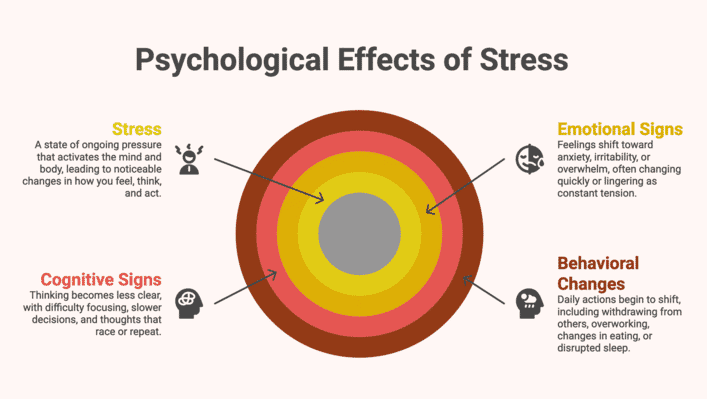
The psychological effects of stress include changes in mood, thinking patterns, and behavior that reflect how your system is responding to ongoing pressure.
These changes tend to show up in a few areas:
Emotional signs
Emotional stress often includes anxiety, irritability, mood swings, and feeling out of control. These emotional shifts can feel constant or unpredictable, moving from calm to frustration quickly.
Some people notice a low, steady sense of tension, while others feel sharp spikes of anxiety that last minutes or hours.
Cognitive signs
Stress can affect how you think, making it harder to focus, remember details, or make decisions.
You may find your thoughts racing or looping, especially at night. Tasks that once took 20 minutes can take twice as long, and simple decisions can feel harder to complete.
Behavioral changes
Stress can influence your actions, often without much awareness.
It may look like:
- Pulling away from people or avoiding interaction
- Working more than usual to stay distracted or in control
- Changes in eating patterns, like eating more or less
- Disrupted sleep, including difficulty falling or staying asleep
- Becoming more reactive in conversations or shutting down completely
What do the psychological effects of stress look like in daily life?
 The psychological effects of stress often appear in small, repeated patterns that shape your day without being obvious at first.
Work and productivity
Stress can reduce focus, slow down decision-making, and lower productivity. You may find yourself rereading the same task multiple times or feeling mentally drained after short periods of work.
This can lead to longer hours without the same level of output.
Relationships and communication
Stress can affect how you respond to others, even in routine conversations. You may feel more reactive, misinterpret tone, or withdraw to avoid conflict. This can create distance in relationships, even when connection is important to you, distance that EMDR for relational trauma can help repair.
Daily habits and routines
Stress can quietly disrupt routines that once felt stable. Sleep may become inconsistent, energy levels can drop, and daily tasks may feel harder to complete. These shifts can build over time and affect overall stability.
When do the psychological effects of stress become a bigger problem?
 The psychological effects of stress become a bigger problem when they stop feeling temporary and begin affecting how you function day to day.
This can look like:
- Ongoing difficulty concentrating that does not improve
- Stronger emotional reactions that feel harder to control
- Feeling stuck in the same patterns despite trying to change them
- Tasks take more effort or feel harder to complete
- Inconsistent focus, energy, or emotional stability
When stress stays active for weeks or longer, it can begin to affect memory, emotional control, and mental clarity. At that point, it can overlap with anxiety or EMDR for depression, making it harder to return to a more stable state without support.
How can you reduce the psychological effects of stress?
 Reducing the psychological effects of stress starts with understanding how your system is responding and creating space for it to regulate.
It can begin with:
- Improve sleep quality: Getting 7 to 9 hours of consistent sleep can support emotional regulation and reduce reactivity the next day.
- Set clear boundaries: Limiting ongoing demands can lower the mental load that keeps stress active.
- Reduce constant input: Cutting back on notifications and multitasking can help your mind stay more focused and less overwhelmed.
- Create daily pauses: Short breaks, even 5 to 10 minutes, can help your system reset and slow down.
For patterns like repeated anxiety, emotional reactivity, or feeling stuck in the same responses, therapy can help you process what is driving them so they begin to feel less intense and easier to move through.
Get support for these effects of stress now
The psychological effects of stress can continue to shape how you think, feel, and respond, even when you are trying to manage them. These patterns are not random. They often come from your system, staying in a constant state of pressure or alert.
If you recognize these changes in your daily life, there is value in understanding what is driving them and working through them in a structured way.
Support can help you make sense of these responses so they begin to feel less intense and more manageable in your day-to-day experience. Get a Free Consultation today.
Frequently asked questions
How does stress affect your mood, focus, and behavior?
Stress can disrupt mood, reduce focus, and change behavior by keeping your system activated. This often shows up as irritability, slower thinking, and habits like withdrawing, overworking, or struggling to stay consistent.
What do the psychological effects of stress look like in daily life?
They show up as small, repeated changes in how you think, feel, and act. This can include difficulty focusing, reacting quickly, or struggling to keep up with routines.
Can stress cause anxiety or depression?
Yes, ongoing stress can lead to anxiety or depression when it continues without relief. Constant strain can increase worry, lower mood, and reduce motivation.
When does stress become anxiety?
Stress becomes anxiety when the response continues without a clear cause. It often feels like ongoing worry, tension, or unease that does not settle.
When should you talk to a therapist or healthcare provider about stress?
You should seek support when stress affects your daily life or feels hard to manage. If it continues despite your efforts, professional guidance can help you understand and address it.