

Having an EMDR preparation checklist gives you a way to understand how ready your mind and body feel before starting trauma processing. It looks at your ability to manage emotional distress, stay grounded, and maintain stability in daily life.
Rushing into a session without that foundation can increase distress and make recovery between sessions more difficult. But when you have a better sense of how much you can handle, the process tends to feel steadier and more manageable.
This guide walks through why preparation matters, how readiness is assessed, and how to prepare for EMDR in a way that supports steady, manageable progress.
Why preparation for EMDR matters
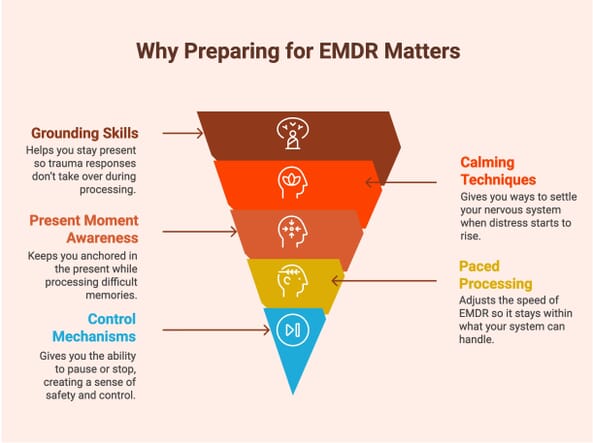
Preparation for EMDR matters because your nervous system needs stability before it can safely process difficult memories. Without that foundation, sessions can feel too intense, which can slow progress and leave you feeling unsettled afterward.
To see how preparation supports you, here are the reasons it makes EMDR safer and more manageable:
Helps you stay grounded
Trauma can trigger intense emotional and physical reactions. Preparation helps you stay grounded so common trauma responses, like anxiety, flashbacks, or hyperarousal, don’t take over. Research shows that learning these skills makes processing trauma safer and more manageable.
Teaches you how to calm your system
You learn simple tools that help your body settle when distress rises. These skills allow you to move through difficult moments and recover more quickly.
Keeps you connected to the present
Preparation builds your ability to notice a memory while still feeling anchored in the current moment. This prevents the experience from feeling overwhelming.
Slows the process to a safe pace
Preparation allows your therapist to match the pace of EMDR to what your system can handle at that moment. If distress rises too quickly, you can pause, reset, and continue only when you feel stable again.
Builds a sense of control
Preparation establishes clear ways to pause or stop the session at any time. Knowing you can slow down or stop when needed helps reduce fear and makes it easier to engage with the process.
Makes recovery easier after sessions
With preparation, your system can settle more quickly after each session. This reduces the chance of feeling overwhelmed for long periods.
EMDR readiness checklist
 An EMDR preparation checklist helps you assess if your mind, body, and daily life are stable enough to begin trauma processing safely, focusing on your ability to regulate emotions, stay present, and maintain consistency while helping you determine if EMDR is right for you.
To help you evaluate your readiness more clearly, use the checklist below to reflect on where you currently stand.
Internal and emotional readiness
These points help you notice how your body and emotions respond when stress shows up:
- I can bring my distress down within a few minutes using a grounding skill
- I can stay with difficult emotions without needing to shut down
- I notice body signals early, like tension, shallow breathing, or restlessness, activation patterns that EMDR for anxiety treatment specifically targets
- I can stay aware of where I am, even when thinking about something painful
- I can settle back to a calmer state after emotional spikes
- I can recognize when I am getting overwhelmed before it escalates
- I feel safe enough to stay present in my body, even when uncomfortable
Daily Life stability and support
Your day-to-day environment can affect how supported you feel during this process:
- My living situation feels safe and consistent
- I am not in the middle of a major disruption or crisis
- I have at least one person I can reach out to when I need support
- I can attend sessions regularly without frequent interruptions
- I am sleeping enough to feel somewhat rested most days
- I have space in my schedule to slow down after sessions
- I am willing to reduce alcohol or substance use around therapy days
Readiness in your therapeutic relationship
This part focuses on your comfort level and sense of safety within your therapeutic relationship:
- I feel safe sharing honestly, even when it feels vulnerable
- I understand the basic structure of EMDR and what to expect
- I know I can pause the process at any time
- I feel comfortable noticing and sharing what comes up in my body
- I trust that my therapist will guide the pace in a way I can handle
Mental and practical preparation
These items focus on how prepared you feel going into the process:
- I have a sense of what I want to work through
- I can notice patterns in my thoughts, reactions, or triggers
- I am open to experiencing both emotions and body sensations
- I have a simple plan for how I will take care of myself after sessions
- I am willing to move at a pace that feels steady, not rushed
What to do before starting
 Before starting EMDR, focus on strengthening your ability to regulate emotions, setting aside time for recovery, and reducing factors that may increase nervous system stress.
Start by building simple ways to steady yourself
Practice grounding daily for 5–10 minutes using techniques such as:
- Deep breathing with 4–6 second inhale and exhale cycles
- Progressive muscle relaxation across major muscle groups
- Safe place visualization for calming imagery
These skills act as immediate stabilizers when distress increases during sessions.
Strengthen support and stability
Take time to talk openly with your therapist about how the process works, what to expect, and how you can pause if something feels too intense, especially important when building trust ties into EMDR for relational trauma work. Make sure the approach feels clear, collaborative, and comfortable for you.
Set up your time and space in advance
Plan so your environment supports focus and safety from the start. Choose a quiet, private space where you will not be interrupted, especially for virtual sessions.
Clear your schedule so you are not rushing before or after your appointment, and give yourself room to slow down. Preparing simple meals ahead of time and planning low-demand activities can also help reduce pressure on the same day.
Reduce nervous system load
Limit caffeine before sessions, as even low doses under 400mg moderately increase anxiety risk and make your system more reactive. it also helps to avoid alcohol or other substances for at least 24–48 hours so your brain can process emotions more clearly and steadily.
Questions to ask yourself before starting
 The following questions can help you notice if more time and support may be helpful before starting EMDR:
- Can I stay present when thinking about difficult memories for at least 30–60 seconds?
- Do I have time stability over the next 3–6 months for consistent sessions?
- Do I have support if I feel emotionally unsettled after therapy?
- Am I choosing this process for my own healing, not external pressure?
- Can I communicate clearly with my therapist if something feels too intense?
How to know when you’re ready
You are ready for EMDR when you can stay present with difficult thoughts or feelings and still feel anchored in the current moment. Let’s walk through the signs that can help you recognize when you’re ready.
Dual awareness begins to feel possible
One gentle way to notice readiness is through what therapists call dual awareness. A memory can come up while awareness of the room, breath, or surroundings stays intact, rather than feeling pulled back into the experience.
Your emotions settle after they rise
Strong emotions may still arise, but there is an ability to return to a calmer state within minutes or a few hours instead of remaining overwhelmed.
You notice stress early and can respond to it
There is growing awareness of when stress is rising, along with the ability to use simple tools to steady the system, even if it takes a few attempts.
Being in your body feels more manageable
You can recognize when stress is building and respond to it. Instead of feeling caught off guard, you’re able to slow things down using simple grounding tools.
Your therapist helps confirm you’re ready
A therapist will help confirm readiness by assessing emotional stability, safety, and any signs of dissociation. If these areas still need support, it usually means more EMDR prep is needed before starting.
When You’re Ready To Get Started
 Getting started with EMDR often comes with a sense that things feel steady enough to move forward, even if some uncertainty is still there.
If you’re unsure, the EMDR preparation checklist above can help you reflect on where you are and what may still need support before beginning.
With years of clinical experience and focus on EMDR therapy, this work is guided with careful pacing and attention to what feels manageable. So when it feels like the right time, reach out and get a free consultation today.
Frequently asked questions
What should I do to prepare for EMDR?
To prepare for EMDR, begin by learning one or two grounding tools, creating space to rest after sessions, and reducing anything that makes your system more reactive. It also helps to talk with your therapist about what to expect and how to pause if needed.
How do I know if I am ready for EMDR?
You may be ready for EMDR if difficult emotions can come up without fully pulling you out of the present moment. Another sign is being able to settle again after stress instead of staying overwhelmed for long periods.
Can EMDR feel intense even if I am prepared?
Yes, EMDR can still feel emotionally intense, even when you are well prepared. The difference is that preparation gives you ways to stay grounded, recover more smoothly, and move through the process with more stability.
What happens if I am not ready for EMDR yet?
If you are not ready for EMDR yet, your therapist may spend more time helping you build stability before trauma processing begins. This often includes strengthening grounding skills, building safety in therapy, and improving daily support.
How long does EMDR preparation usually take?
The length of EMDR preparation depends on your history, current stress level, and how steady your system feels. Some people need only a few sessions, while others benefit from taking more time to build stability first.