

Panic attack treatment can help you understand what is happening in your body, become less afraid of panic symptoms, and return to situations you have been avoiding. The five therapy options include cognitive behavioral therapy, exposure therapy, acceptance and commitment therapy, mindfulness-based cognitive therapy, and EMDR for trauma-linked panic.
A panic attack can make you feel as though something terrible is happening, even when you are physically safe. Your heart may race, your breathing may change, and your surroundings may suddenly feel unfamiliar. Fear of another attack can then begin shaping where you go and what you do.
This guide explains how five approaches to panic attack treatment in Denver work and the symptoms each one may help address.
How panic attacks differ from panic disorder
 A panic attack is a sudden wave of intense fear that usually reaches its strongest point within minutes. Panic disorder involves repeated, unexpected panic attacks followed by at least one month of worrying about another attack or changing how you live to prevent one.
During an attack, your heart may race, your chest may feel tight, or you may feel dizzy, shaky, nauseated, or unable to breathe normally. You might fear that you are losing control or experiencing a medical emergency. Having one panic attack does not mean you have panic disorder.
The National Institute of Mental Health explains that panic disorder may lead you to avoid places, activities, or situations connected to the fear of another attack.
What are therapy options for panic attacks and panic disorder?
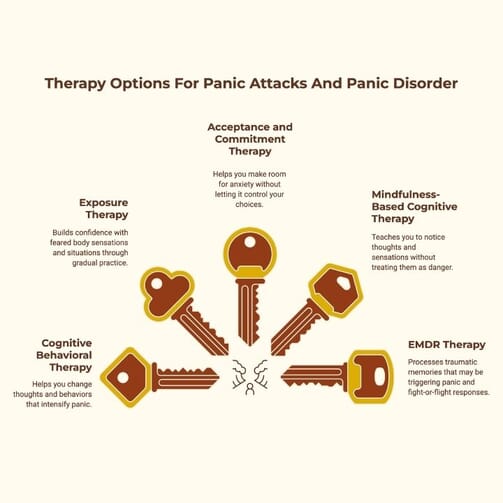 Therapy options include cognitive behavioral therapy, exposure therapy, acceptance and commitment therapy, mindfulness-based cognitive therapy, and EMDR for panic connected to trauma. Each approach addresses a different part of the panic cycle.
1. Cognitive behavioral therapy
Cognitive Behavioral Therapy is structured talk therapy that helps you recognize the thoughts and behaviors that intensify panic.
You learn to question frightening beliefs about physical sensations, such as assuming a racing heart means you are in danger. This can help you respond more calmly and stop fear from strengthening the panic cycle.
2. Interoceptive and situational exposure therapy
Interoceptive and situational exposure therapy includes body-focused practice and gradual contact with situations you fear. Interoceptive exercises safely recreate mild sensations, such as a faster heartbeat or lightheadedness. Situational exposure helps you return to avoided places or activities. Repeated practice can help both experiences feel less threatening and easier to manage.
3. Acceptance and commitment therapy
Acceptance and Commitment Therapy is a form of talk therapy that helps you notice anxious thoughts and physical sensations without allowing them to control your choices.
Instead of trying to eliminate every uncomfortable feeling, you practice making room for it. You can then take small steps toward the activities and relationships that matter to you.
4. Mindfulness-based cognitive therapy
Mindfulness-Based Cognitive Therapy is a form of talk therapy that combines mindfulness meditation with Cognitive Behavioral Therapy. It helps you notice thoughts, emotions, and body sensations without immediately treating them as signs of danger.
Creating this pause can help you respond to a racing heart, tight chest, or anxious thought without intensifying the fear.
5. EMDR for trauma-linked panic symptoms
Eye Movement Desensitization and Reprocessing may help when panic is rooted in trauma or frightening memories. The National Center for PTSD explains that EMDR involves recalling a traumatic experience while using bilateral stimulation, such as back-and-forth movements or sounds. Reprocessing the memory may reduce the fight-or-flight response it continues to trigger.
How a panic attack therapist in Denver tailors treatment
 A panic attack therapist shapes treatment around what triggers your panic, how you respond, and what the fear has taken away from your daily life. This helps identify which approach may address the part of the panic cycle affecting you most.
Your therapist may ask about:
- When your panic attacks began and how often they happen
- The sensations and thoughts that frighten you
- Places, activities, or situations you avoid
- Trauma or medical experiences connected to your symptoms
- How panic affects your sleep, work, and relationships
Body-focused fear may be addressed through interoceptive exposure, while situational exposure can help with avoidance. EMDR may be considered when panic is connected to trauma.
Treatment can change as you progress, with more preparation, a slower pace, or a different approach when needed.
How Debbie Carter treats recurring and trauma-linked panic
 I begin by learning how panic feels in your body, when it started, and how it affects your choices today. We also look at the memories, situations, or relationship patterns that may be keeping your nervous system on high alert.
My approach includes Eye Movement Desensitization and Reprocessing and Internal Family Systems-informed care. EMDR can help process experiences that continue to trigger fear, while parts-based work helps you understand the protective responses that developed around them.
Before processing begins, we build grounding and emotional regulation skills to help you stay connected to the present. Treatment moves at a pace that feels manageable because panic is not something you should be expected to push through.
Interrupt the panic cycle with specialized therapy in Denver
Panic can affect your life long after an attack ends. You may avoid certain places, monitor every physical sensation, or plan your day around the fear that it will happen again. EMDR therapy can help address frightening memories and earlier experiences that continue to activate panic in the present.
I offer in-person EMDR therapy for recurring and trauma-linked panic at my Denver office, along with virtual sessions across Colorado. Together, we can look beneath the symptoms and gently process what may be keeping your nervous system on high alert.
Get a Free Consultation to discuss your panic attacks and how EMDR may help.
Frequently asked questions about panic attacks
How long do panic attacks usually last?
Panic attacks often reach their strongest point within minutes. The most intense symptoms may ease within 20 to 30 minutes, although exhaustion, tension, or worry can remain longer. Experiences vary, and persistent symptoms deserve medical attention.
Is it normal to have daily panic attacks?
Daily panic attacks can occur, but they should not be ignored. Frequent attacks may indicate panic disorder or another physical or mental health concern. A licensed therapist and medical provider can help identify what is contributing to them.
What is the root cause of panic attacks?
Panic attacks do not have one universal cause. Genetics, stress, trauma, sensitivity to body sensations, medical conditions, substances, and learned fear responses may contribute. Treatment focuses on the factors maintaining your specific panic cycle.
Should I see a doctor about panic attacks?
Yes. A medical evaluation is especially important when symptoms are new, severe, or include chest pain, fainting, or breathing difficulty. Call 911 when you believe you may be experiencing a medical emergency.
Can panic disorder be cured?
Panic disorder is treatable, and symptoms can improve significantly with appropriate care. Therapy can reduce attacks, fear of bodily sensations, and avoidance. Progress differs by person, so treatment should be adjusted according to your response and needs.