

Postpartum therapy can help when sadness, anxiety, anger, shame, or distressing memories begin affecting your relationship with yourself, your baby, or your daily life. You do not need to wait until your symptoms become severe to seek support.
The postpartum period can feel nothing like you expected. You may love your baby and still feel overwhelmed, disconnected, frightened, or unlike yourself. These feelings do not make you a bad parent, and you do not have to carry them alone.
Parents seeking postpartum therapy in Denver can use these seven signs to recognize when speaking with a therapist may help.
When postpartum distress becomes more than a difficult adjustment
 Postpartum distress may require additional support when symptoms last longer than two weeks, feel intense, or interfere with caring for yourself and moving through daily life. Baby blues can include crying, irritability, anxiety, and feeling overwhelmed, but these symptoms usually improve within the first two weeks after birth.
Postpartum depression or anxiety can begin during pregnancy or after delivery. Symptoms may feel heavier, last longer, and affect your sleep, thoughts, relationships, or connection with your baby. A 2025 scoping study of postpartum mental health problems also found that postpartum depression is shaped by a combination of medical, social, and personal factors.
You do not have to determine the cause on your own. A doctor or mental health professional can help you understand what you are experiencing.
7 Signs postpartum therapy in Denver may help
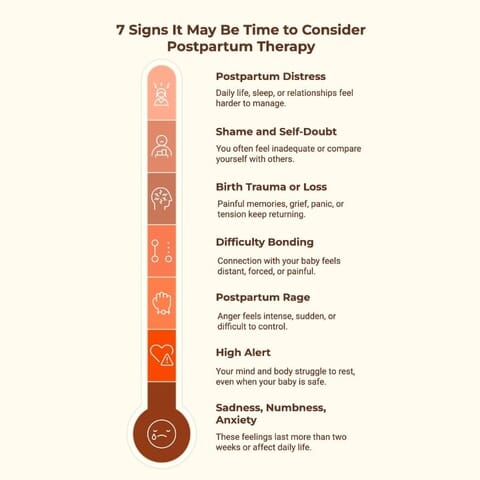 Postpartum therapy may help when emotional distress feels persistent, difficult to manage, or unlike your usual response to stress. You may recognize one sign strongly or see parts of yourself across several of them.
1. Sadness, Numbness, or Anxiety Has Lasted More Than Two Weeks
Sadness, numbness, or anxiety lasting longer than two weeks may be more than the baby blues. You might cry often, feel empty, lose interest in things you usually enjoy, or move through the day without feeling fully present.
You may also feel guilty because you expected this season to be happy. Your pain is not evidence that you are ungrateful or a bad parent. It is a sign that you may need care and support.
2. Your Mind Stays on High Alert Even When Your Baby Is Safe
Postpartum anxiety can make your mind and body feel unable to rest. You may repeatedly check your baby’s breathing, imagine frightening situations, or feel certain that something terrible will happen.
Even when your baby is safe, your heart may race, and your thoughts may continue searching for danger. Therapy can help you recognize these patterns and learn ways to calm your nervous system when fear takes over.
3. Anger or Postpartum Rage Feels Difficult to Control
Postpartum rage can feel like sudden, intense anger that is stronger than the situation seems to call for. You may snap at your partner, feel overwhelmed by noise or touch, or become angry when your baby will not settle. Exhaustion, hormonal changes, anxiety, depression, and feeling unsupported can all add pressure.
4. Bonding With Your Baby Feels Distant, Forced, or Painful
Difficulty bonding can feel like emotional distance, numbness, resentment, fear, or pressure to create a connection that has not formed naturally. You may care for your baby while feeling disconnected inside.
Bonding does not always happen immediately, and struggling with it does not make you a bad parent. Postpartum therapy can help you speak honestly about these feelings and understand what may be making connection difficult.
5. Birth Trauma or Pregnancy Loss Keeps Intruding on the Present
Birth trauma or pregnancy loss may continue to appear through upsetting memories, nightmares, body tension, panic, avoidance, or a sense that the experience is happening again. Medical procedures, an emergency delivery, feeling unheard, miscarriage, stillbirth, or separation from your baby can leave emotional wounds.
You may feel pressure to focus on being grateful or to move forward quickly. Your grief and fear still deserve care, even when other people do not understand their weight.
6. Shame and Self-Doubt Are Reshaping How You See Yourself
Postpartum shame can turn difficult moments into painful beliefs about who you are. You may think you are not strong enough, loving enough, patient enough, or capable of being the parent your baby needs.
These thoughts often become stronger when you compare yourself with other parents or hide how you feel. Therapy can help bring them into the open, where they can be met with compassion instead of secrecy and judgment.
7. Postpartum Distress Is Disrupting Sleep, Relationships, or Daily Life
Postpartum distress may need professional attention when it interferes with sleep, eating, concentration, relationships, work, or basic self-care. This is different from waking because your baby needs you. You may be unable to sleep even when you have the chance or feel too anxious to let someone else help.
You may also withdraw from people you love or feel unable to complete ordinary tasks. You do not need to prove that things are “bad enough” before reaching out.
How Postpartum Depression Treatment in Denver Can Help
 Postpartum depression treatment in Denver can help by processing birth trauma, softening shame and inner conflict, and working alongside medical and community support. Each form of care addresses a different part of the postpartum experience.
EMDR Can Process Birth Trauma and Distressing Memories
Eye Movement Desensitization and Reprocessing can help process birth trauma, pregnancy loss, medical experiences, or other memories that still feel painfully present. It uses bilateral stimulation, such as guided eye movements or alternating taps, while you briefly notice the memory and what comes up.
Preparation comes first. You can learn what EMDR therapy is like before deciding if this approach speaks to what you are experiencing.
IFS-Informed Therapy Can Soften Shame and Inner Conflict
Internal Family Systems-informed therapy can help you understand the parts of yourself that feel ashamed, afraid, angry, or convinced that you are failing. These parts may be trying to protect you from rejection, criticism, disappointment, or further pain.
Instead of pushing them away, you learn to meet them with curiosity and compassion. This can help loosen painful beliefs and make room for a steadier connection with yourself.
Therapy Can Work Alongside Medical and Community Support
Therapy can be one part of a wider postpartum support system. Depression, anxiety, sleep disruption, physical recovery, feeding concerns, hormonal changes, and medication needs may require help from different professionals.
Your support may include an obstetrician, primary care provider, psychiatrist, lactation specialist, doula, support group, trusted family member, or friend. Accepting practical help with meals, rest, childcare, or household responsibilities can also give your mind and body room to recover.
Recognize When Symptoms Require Urgent Care
 Seek urgent help if you are thinking about harming yourself or your baby, cannot keep either of you safe, or experience hallucinations, delusions, paranoia, or severe confusion. These symptoms need immediate evaluation and should not wait for a routine therapy appointment.
Call 911 or go to the nearest emergency room if there is immediate danger. For crisis support in Colorado, call or text 988.
Start Postpartum Therapy in Denver With a Free Consultation
You do not need to hide the sadness, fear, anger, or shame you have been carrying. Speaking honestly about your experience can be the first step toward feeling more like yourself again.
I offer in-person postpartum therapy at my Denver office and virtual appointments throughout Colorado. Together, we can talk about what has been happening and the kind of support you need. Get a Free Consultation to begin the conversation.
Frequently asked questions about postpartum depression treatment
What type of therapy is best for postpartum depression?
Cognitive behavioral therapy and interpersonal psychotherapy have evidence supporting their use for postpartum depression. EMDR may also help when birth trauma or distressing memories are part of the experience. Treatment should reflect your symptoms and needs.
Is it possible to experience postpartum depression after a miscarriage?
Yes. Depression, anxiety, grief, and trauma can occur after miscarriage or pregnancy loss. These responses deserve support even if other people do not recognize the depth of the loss.
How long does postpartum depression last?
Postpartum depression can last for months or longer without treatment. Duration varies based on symptom severity, previous mental health concerns, support, stress, and access to care. Early support may help reduce its impact.
What kind of doctor should I see for postpartum depression?
You can begin with an obstetrician, primary care provider, or mental health professional. A psychiatrist can evaluate medication needs, while a therapist can provide psychotherapy and support for emotional, relational, and trauma-related concerns.
What happens if postpartum depression is left untreated?
Untreated postpartum depression can continue affecting mood, sleep, daily functioning, relationships, and bonding. Symptoms may also become more severe. Professional support can help you understand your options and begin receiving appropriate care.