

What is EMDR therapy like? It’s one of the first questions people ask before beginning trauma therapy.
EMDR therapy follows a structured, eight-phase process that uses bilateral stimulation to help your brain process difficult memories. It begins with preparation, moves into trauma processing, and ends each session by helping you reconnect with the present.
Understanding what to expect can make your first session feel a little less unfamiliar.
What happens before EMDR therapy begins?
 Before EMDR therapy begins, the focus is on helping you feel emotionally prepared before approaching difficult memories. The first sessions are spent understanding your story, identifying the experiences you’d like to work through, and building the foundation needed for trauma processing.
I’ll also introduce grounding techniques that help you feel more stable when difficult emotions arise. Taking time to prepare helps create a foundation for healing, allowing us to move forward at a pace that feels fit for you.
What happens during an EMDR session?
 During an EMDR session, you’ll focus on one distressing memory while using bilateral stimulation, such as eye movements, gentle tapping, or alternating sounds. You won’t need to retell every detail of your experience. Instead, you’ll briefly bring the memory to mind while following the bilateral stimulation for short periods.
After each set, you’ll pause and notice whatever thoughts, emotions, images, or physical sensations come up. We’ll repeat this process all throughout, allowing your brain to continue processing the memory until it begins to feel less distressing.
Before the session ends, we’ll strengthen a more helpful belief connected to that memory and gently bring your attention back to the present.
What does EMDR therapy feel like?
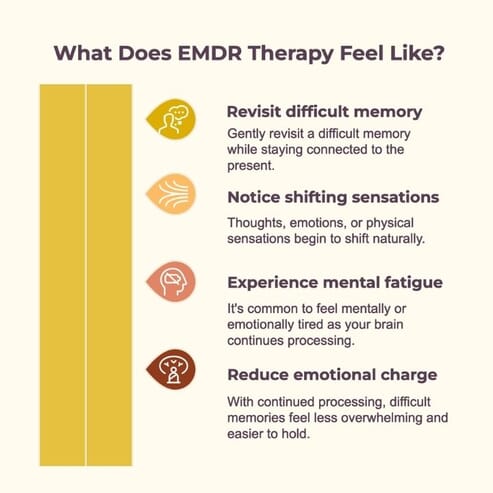
EMDR therapy often feels like gently revisiting a difficult memory while staying connected to the present. As you focus on a difficult memory, you may notice thoughts, emotions, or physical sensations begin to shift naturally.
Also, one thing to expect after an EMDR session is a sense of mental fatigue as your brain continues making sense of what came up during therapy. You may begin to notice that memories feel less emotionally charged and easier to hold without the same sense of distress.
How long does EMDR therapy take?
 EMDR therapy sessions typically last 50 to 60 minutes. Extended sessions last 75 to 90 minutes, while EMDR intensives may take place over several hours or multiple days.
The total number of sessions depends on your history, your goals, and the experiences you’re working through.
There isn’t a timeline you need to meet. Healing unfolds differently for everyone, and I’ll work with you at a pace that feels right for where you are today.
Who is EMDR therapy right for?
 EMDR therapy is right for adults who want to heal from experiences that continue to affect their daily lives. It can help adults whose symptoms are connected to traumatic or distressing life experiences, including PTSD, anxiety, depression, grief, phobias, and medical trauma.
EMDR can also be especially helpful if traditional talk therapy has felt difficult or emotionally overwhelming. You don’t have to tell every detail of your story for meaningful healing to take place.
Start EMDR therapy in Denver at your pace
Understanding what EMDR therapy feels like is only part of the picture. The next step is deciding if you’re ready to stop carrying experiences that still feel present. Sometimes, one conversation is enough to better understand what you’ve been carrying and how EMDR may be able to help.
Get a Free Consultation to start with EMDR therapy today.
FAQs about what EMDR therapy is like
Do you talk out loud during EMDR?
Not always. You don’t have to share every detail of a painful memory for EMDR to be effective. You’ll only talk about what feels comfortable, and I’ll guide you through the session without asking you to relive your experience.
Do you cry during EMDR?
You might cry during sessions, and that’s okay. Tears are one way your nervous system responds as difficult emotions begin to shift. Some people cry, while others don’t. Both experiences are completely normal.
Is EMDR emotionally draining?
Yes, it can be. Processing difficult memories takes emotional energy, so it’s common to feel mentally tired after a session. Giving yourself permission to rest afterward is an important part of caring for yourself.
Is EMDR for PTSD only?
No. EMDR can also help with anxiety, grief, childhood experiences, medical trauma, phobias, and other events that continue to affect how you feel and respond in daily life.
How can you tell if EMDR is working?
You may notice that memories begin to feel less distressing. You might also respond differently to situations that once felt overwhelming, with a greater sense of calm, perspective, or emotional balance.